
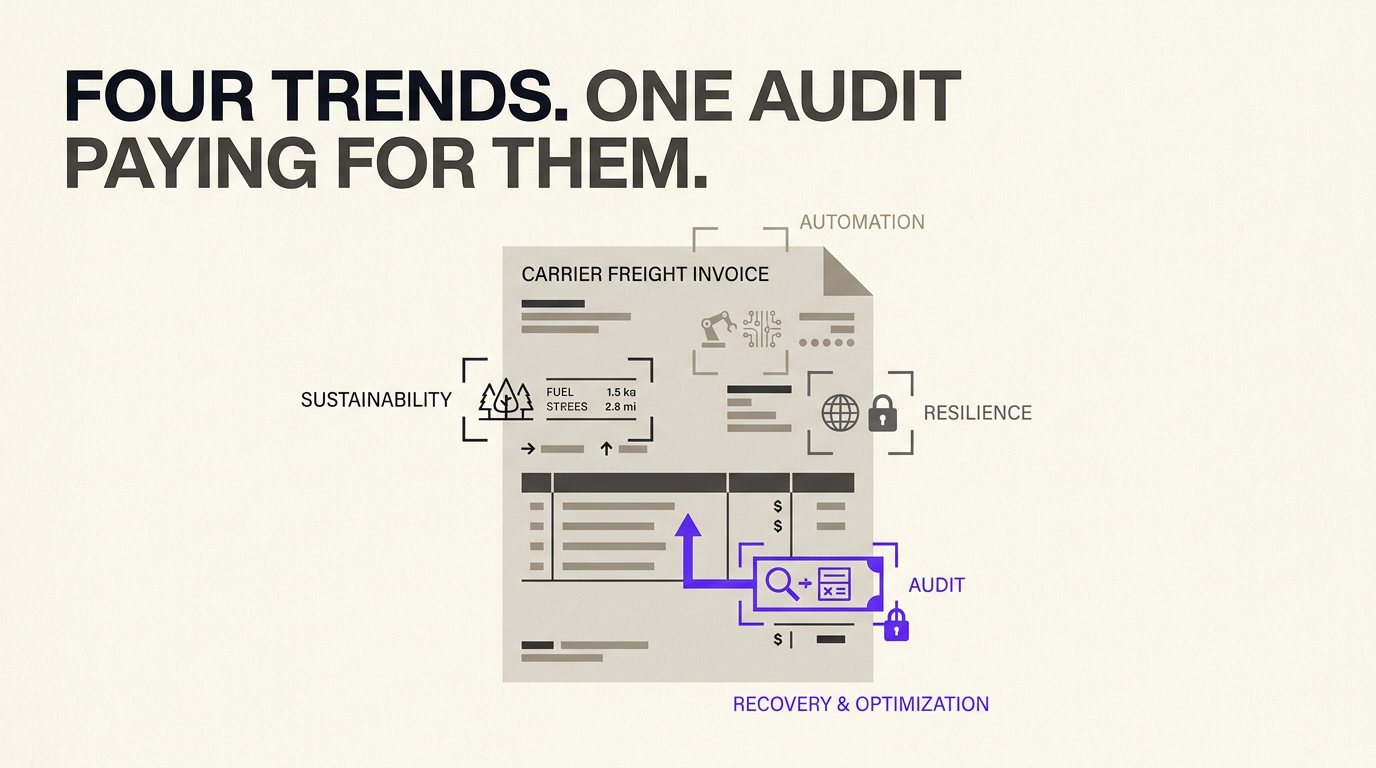
The five biggest trends reshaping freight audit and invoicing are automation and AI, data analytics and visibility, sustainability and social responsibility, customer experience and loyalty, and faster cash conversion (lower DSO). Together, these shifts are helping freight brokers and third-party logistics providers (3PLs) cut audit costs, catch billing errors before they leave the building, and get paid sooner. Below is what each trend means and how it affects your bottom line.
Automation and AI
The biggest shift is the move from manual, sampling-based audit to automated, every-invoice validation. AI reads freight documents, matches each charge against contracts and rates, and flags exceptions before an invoice is paid or passed to a customer. According to industry research, automation and AI can meaningfully reduce freight audit costs and improve accuracy by cutting the manual review and rework that drive up cost.
Data Analytics and Visibility
Audited invoice data is a source of truth about freight spend. Brokers and 3PLs are using that data to see carrier performance, accessorial patterns, and lane-level cost in real time — turning the audit from a back-office chore into a decision-making input.
Sustainability and Social Responsibility
Shippers increasingly expect their logistics partners to measure and report on sustainability. Clean, structured freight data makes it possible to track emissions and efficiency alongside cost.
Customer Experience and Loyalty
Accurate, on-time invoices are part of the customer experience. Fewer disputes and cleaner billing build the trust that keeps shippers and carriers coming back.
Faster Cash Conversion and Lower DSO
For brokers and 3PLs, the trend that ties every other one together is cash flow. Accurate invoices don’t just reduce disputes — they get you paid sooner. Every billing error, missing proof of delivery, or manual rekey adds days to your days sales outstanding (DSO), the average number of days it takes to collect on an invoice after a load is delivered. The longer an invoice sits in dispute or rework, the longer your cash is tied up in receivables instead of funding your next load.
This is where freight audit and invoicing accuracy becomes a financial lever, not just an operational one. When invoices are audited and validated before they go out, fewer are kicked back, collections speed up, and DSO drops. The operators pulling ahead are the ones treating invoice accuracy as the first step to getting paid sooner — turning the back office from a cost center into a cash-flow engine.
Freight Audit and Invoicing Trends: FAQ
What are the top trends in freight audit and invoicing?
The leading trends are automation and AI, data analytics and visibility, sustainability and social responsibility, customer experience and loyalty, and faster cash conversion through lower DSO. Each helps brokers and 3PLs reduce errors, speed collections, and get paid sooner.
How does AI reduce freight audit costs?
AI and automation validate invoices against contracts, rates, and shipment data automatically — catching billing errors before invoices go out. That removes much of the manual review and rework that drive up freight audit cost.
How does freight audit accuracy affect DSO?
Accurate invoices are disputed and reworked far less often, so collections happen faster. Fewer kickbacks means a lower days sales outstanding (DSO) — less cash tied up in receivables and more available to fund the next load.