
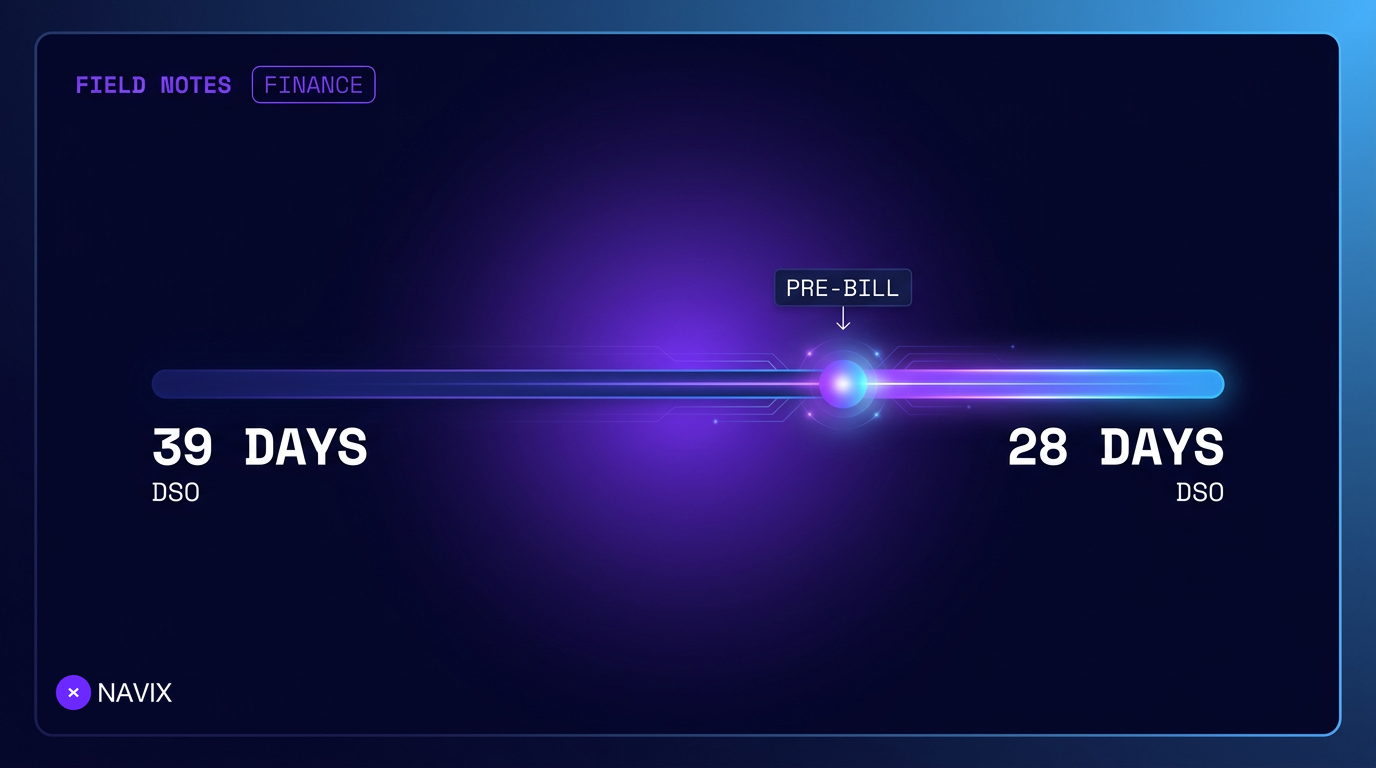
Customer snapshot — Industry: Third-Party Logistics · Service: Managed Transportation & Freight Brokerage · TMS: Revenova · Platform: Navix Pre-Bill & Invoice Automation · Primary goal: Accelerate customer billing
Navix freight audit software automates that line-item review on every carrier invoice and bills the customer the moment the load is validated.
The Challenge: Billing Waited on Carrier Paperwork
Answer capsule: Before Navix, KCH Transportation processed customer invoices manually inside its TMS (Revenova), and billing teams had to wait on carrier paperwork before invoicing customers. Customer-specific billing requirements and document dependencies capped automation — and every added load scaled manual effort.
KCH ran an efficient brokerage on Revenova, but billing was heavily manual. Customer invoices were keyed by hand in the TMS, and teams couldn’t invoice the end customer until carrier paperwork arrived. Each customer’s specific billing requirements and document rules created bottlenecks that blocked automation. Days to Bill sat at 8; DSO sat at 39. For a brokerage, DSO is oxygen — cash trapped in receivables can’t cover the next load.
Why KCH Chose Navix
Answer capsule: KCH selected Navix for its flexible rules engine, its ability to support customer-specific billing requirements, and a partnership approach built on continuous innovation.
The billing problem wasn’t volume alone — every customer billed differently. KCH needed automation that could bend to each customer’s requirements instead of forcing one rigid workflow. Navix’s rules engine and intelligent exclusion logic fit, and the two teams set a shared goal: cut manual effort and accelerate billing.
The Solution: Navix Pre-Bill
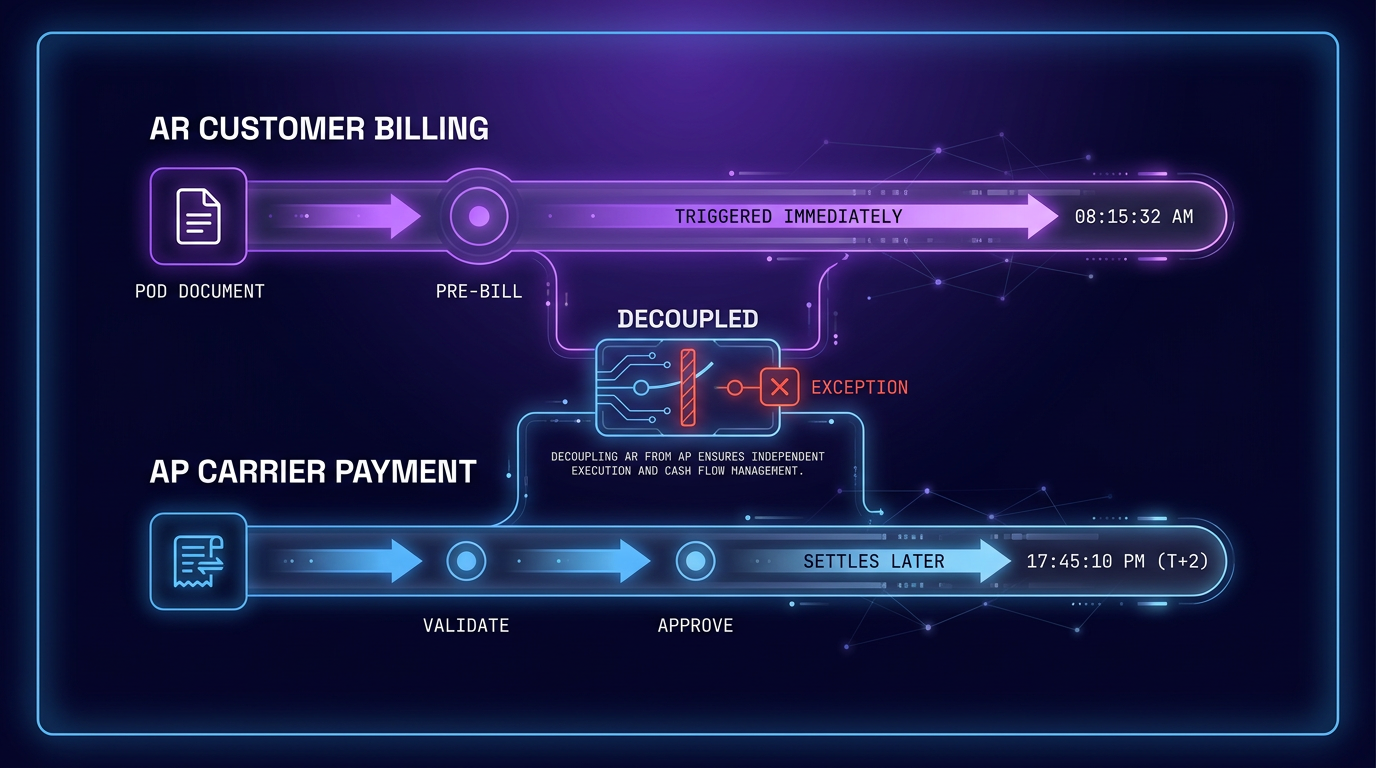
Answer capsule: Navix Pre-Bill lets KCH approve Proof of Delivery (POD) documents and required receipts independently of receiving or approving the carrier invoice. By separating the AR process from the AP process, KCH invoices its end customers as soon as the required documentation is available — accelerating cash flow and reducing days-to-bill.
Through a phased partnership, KCH helped design, develop, and refine Pre-Bill to meet complex customer billing requirements. Together the teams defined workflows, encoded customer-specific billing rules, and introduced intelligent billing-status exclusion logic that eliminated unnecessary validations. Adoption grew to over 90% of eligible loads, and the process became progressively more automated.
The Results
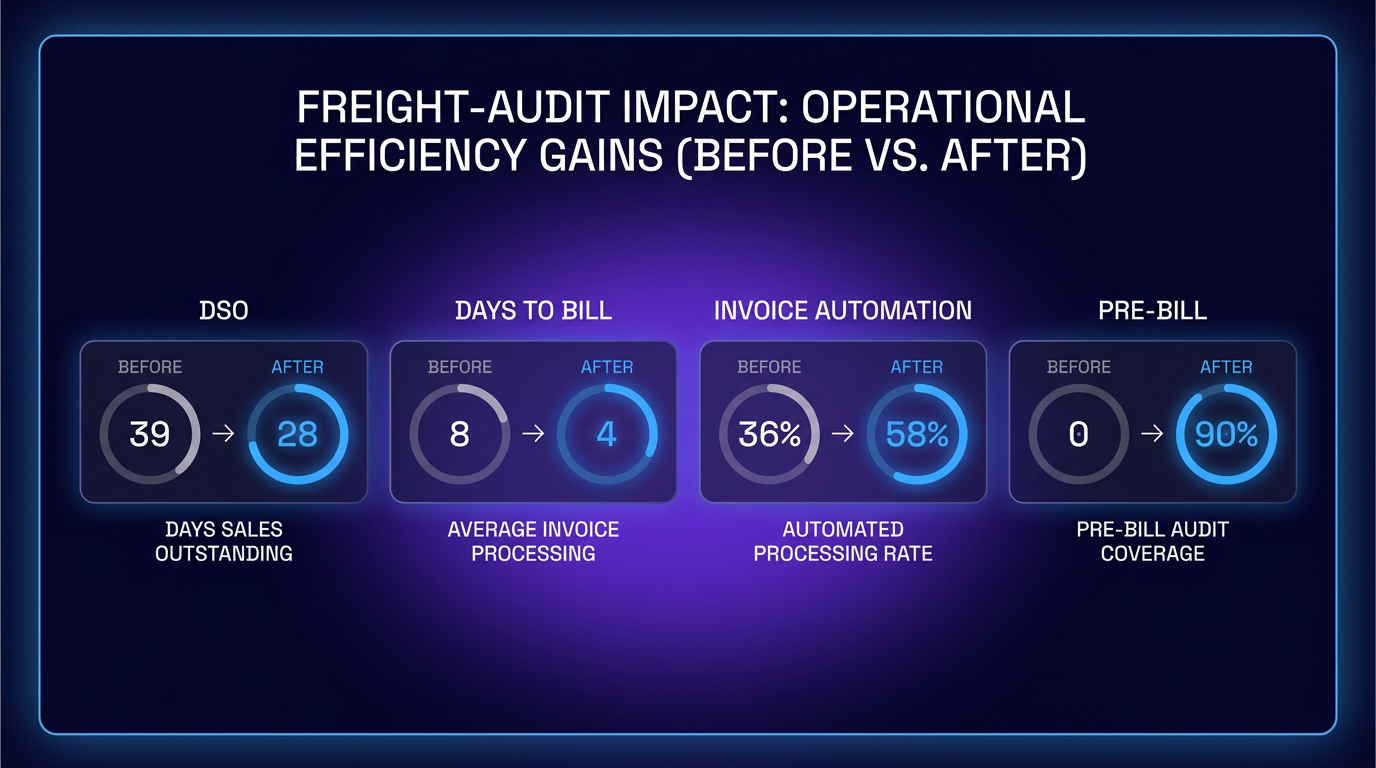
| KPI | Before Navix | Current State with Navix |
|---|---|---|
| Days Sales Outstanding (DSO) | 39 days | 28 days |
| Days to Bill (DTB) | 8 days | 4 days |
| Invoice Automation Rate | 36% | 58% |
| Projected Automation Rate | 44% | 70%+ |
| Pre-Bill Utilization | 0% | 90%+ |
| Customer Billing Process | Fully Manual | 58% Fully Automated |
What the numbers mean: 11 days of DSO recovered is working capital returned to KCH every cycle. Pre-Bill removed the wait on carrier paperwork, so customer billing no longer trails the AP process — and because the automation flexes to each customer’s rules, KCH added volume capacity without adding billing resources. Invoice automation climbed from 36% to 58%, with a path past 70% as final exclusions roll out.
In KCH’s Words
“Working with Navix has been a truly collaborative experience. Their team is proactive, responsive, and continuously brings forward new ideas that help us improve efficiency and scale. What sets them apart is their partnership approach — they take the time to understand our business and work alongside us to solve challenges. Navix has become a strategic partner we trust to support our growth.”
— KCH Transportation
“By working together to build and refine Pre-Bill, we’ve significantly reduced manual effort, improved billing speed, and created a scalable process that supports our continued growth.”
— KCH Transportation
Looking Ahead
KCH continues to work with Navix on new automation opportunities — including combining the Pre-Bill and Invoice queues into a single unified workflow to simplify billing further and push automation past 70%.
Billing still waiting on carrier paperwork? See what Navix Pre-Bill would do to your DSO. Request a demo.