
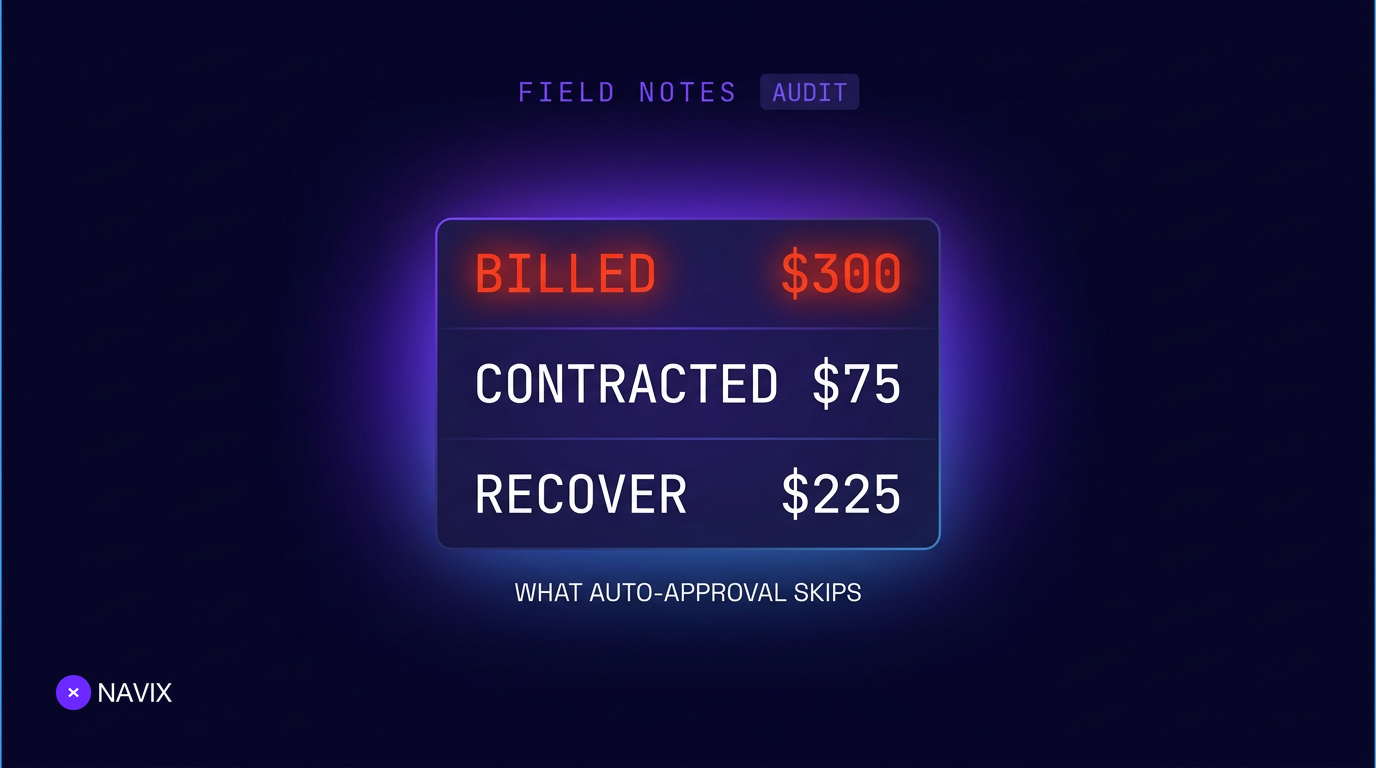
What Is the Core Difference Between Navix and Epay Manager?
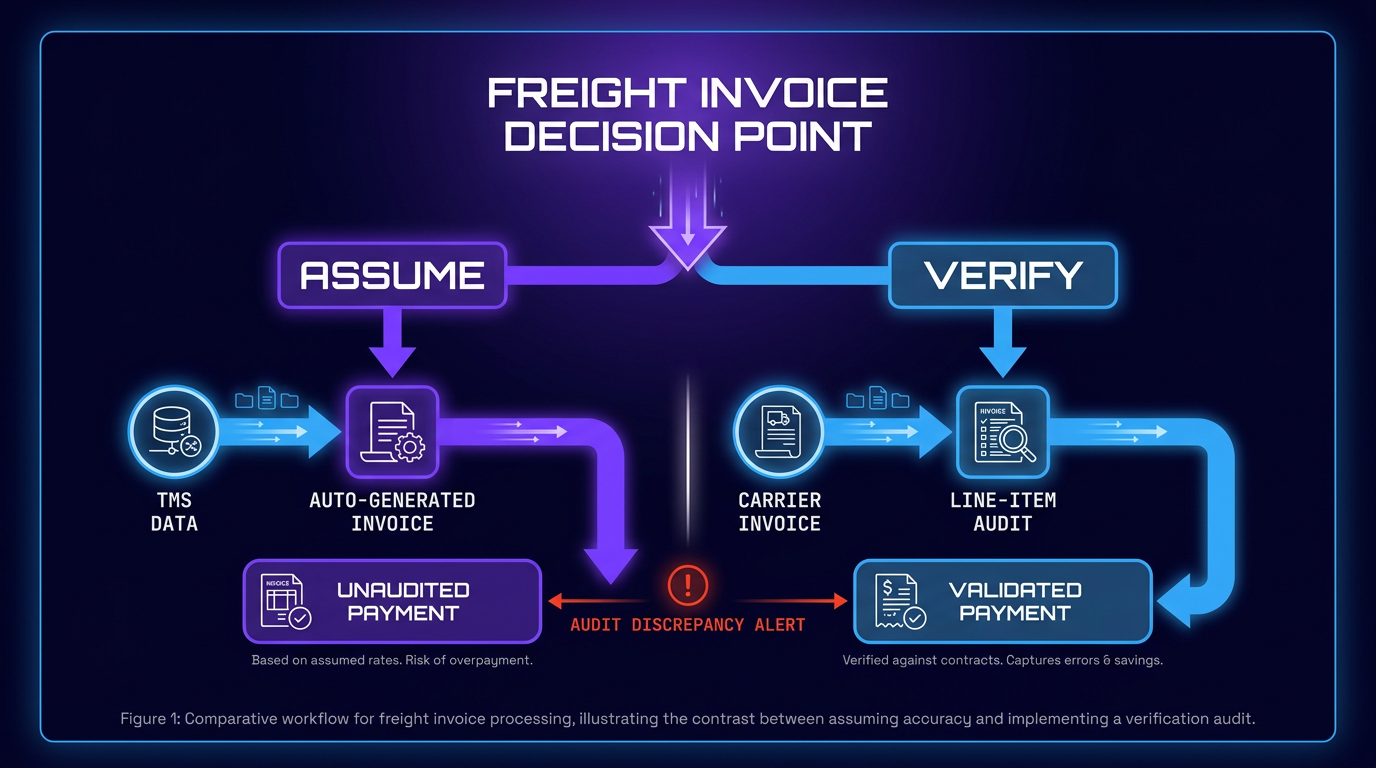
Answer capsule: Navix is audit-first software that validates every line item on carrier invoices using AI. Epay Manager is a workflow and payment platform that eliminates the audit by auto-generating invoices from TMS data. They represent fundamentally different philosophies — verify vs. assume.
Epay Manager, acquired by OTR Solutions in February 2024, auto-generates the carrier’s invoice using the broker’s TMS data as the source of truth. The carrier or factor accepts or rejects the stated amount — “Audit Proof Invoicing” that removes the audit step entirely. It fits factored-carrier operations well.
Navix takes the opposite approach. Carriers submit their own invoices, and Navix’s AI engine validates every charge at the line-item level against contracted rates and each shipper’s specific business rules — catching errors the TMS data itself might hide. The question for brokers: do you trust your TMS data enough to skip the audit?
When Does a Broker Need True Auditing vs. Workflow Automation?
Answer capsule: Brokers managing LTL, drayage, or intermodal need line-item auditing because carrier billing in these modes is complex, variable, and frequently incorrect. FTL-only operations with clean TMS data and factored carriers may find workflow automation sufficient.
Epay works well when: you operate primarily in FTL; your carriers are factored; TMS rate data is consistently accurate; invoices rarely deviate from rate confirmations. Navix becomes essential when: you handle LTL with variable fuel surcharges and accessorials; drayage invoices include detention, chassis, and port fees; invoices frequently contain billing errors; you audit against customer- and shipper-specific rules and document requirements; you need to validate charges your TMS doesn’t track.
The fundamental gap: Epay assumes the TMS is right and builds payment around that assumption. Navix assumes invoices need verification and proves which ones are correct.
Why “Audit Proof Invoicing” Isn’t the Same as Auditing
Answer capsule: Epay’s headline results — 98% fewer disputed invoices, 75% less A/P processing time, 99% less A/R processing time — come from skipping the audit, not passing one. If the broker’s rate data is wrong, the overbilling is never caught, because nothing checks it.
Auto-generating an invoice from TMS data prevents disputes because both sides agree to the same number up front. But agreement isn’t accuracy. When a contracted rate is stale, an accessorial is misapplied, or a fuel table is out of date in the TMS, Epay bakes that error straight into the invoice — and everyone signs off on it. Navix exists to catch exactly that class of error before the money moves.
How Do LTL and Drayage Capabilities Compare?
| Capability | Navix | Epay Manager |
|---|---|---|
| Extraction | AI + ML (IDP) | TMS-generated |
| FTL invoice processing | Full audit | Auto-generated from TMS |
| LTL line-item audit | Yes — 4+ years data | Not a core capability |
| Fuel surcharge validation | Against published indices | Based on TMS rate |
| Accessorial verification | Per-contract rules | TMS-stated amount |
| Shipper-specific rules & docs | Full support | Not supported |
| Drayage audit | Full support | Not supported |
| Intermodal audit | Full support | Not supported |
| Cross-border audit | Yes | Limited |
| Weight-break pricing | Automated validation | N/A |
What Results Has Each Platform Demonstrated?
Epay Manager: 98% reduction in disputed invoices; 75% reduction in A/P processing time; 99% reduction in A/R processing time — all achieved by eliminating the audit rather than running one. Navix: KCH Transportation — DSO cut from 39 to 28 days, Days-to-Bill from 8 to 4; Axle Logistics — reallocated nearly half its billing team to higher-value work while roughly tripling volume, no added headcount; minimum 3-day reduction in order-to-cash across all customers.
Epay measures dispute reduction (logical for a platform that generates the invoice itself). Navix measures accuracy recovery and cash acceleration (logical for a platform that catches billing errors humans would miss).
How Does Each Handle Invoice Exceptions?
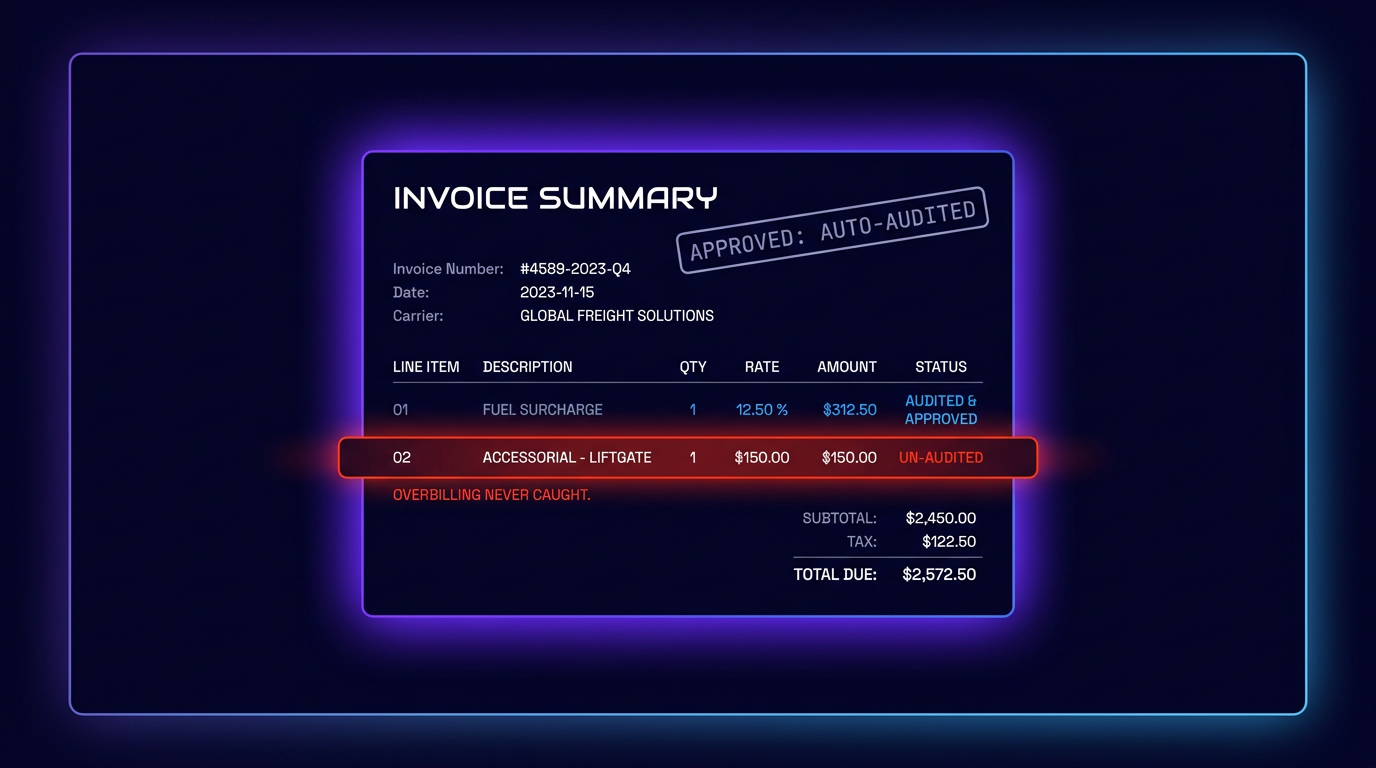
Navix: invoice ingested → IDP extracts every line item → ML compares charges against contracted rates, fuel tables, and shipper rules → passing invoices auto-approved → exceptions flagged with specific root cause → reviewer sees exactly what failed and why. Epay: TMS data triggers invoice auto-generation → carrier accepts/rejects → disputes require manual resolution → POD solicited from the delivering carrier.
The tradeoff: Epay prevents disputes but cannot validate what the TMS itself got wrong. Navix catches everything — including errors in your own data.
Summary Comparison
| Factor | Navix | Epay Manager |
|---|---|---|
| Philosophy | Audit-first: verify then pay | Workflow-first: assume then pay |
| Core strength | Line-item accuracy and process efficiency | Process efficiency only |
| LTL depth | 4+ years production data | Not primary focus |
| Shipper-specific rules | Full support | Not supported |
| Drayage | Full support | Not supported |
| Catches TMS errors | Yes | No (assumes TMS is correct) |
| Best for | Multi-modal 3PLs, complex billing | FTL-heavy, factored-carrier, clean-TMS operations |
Running LTL, drayage, or intermodal? Auto-generated invoices can’t catch what your TMS got wrong. See what line-item auditing finds. Request a demo.